YAMAHA 183-21510-00-93 Front Fender YAS1C
fits model: Hs1, Hs1b. make: Yamaha. year: 1968-71.
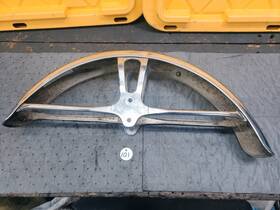
( Part Type: Fender ), ( Vintage Part: Yes ), ( Country Of Origin: Japan ), ( UPC: 183215100093 )
Review YAMAHA Front Fender #183-21510-00-93 fits HS1 HS1B 1968-71
The **Yamaha 183-21510-00-93** is a meticulously crafted, period-correct front fender designed exclusively for Yamaha s iconic **HS1, HS1B, and YAS1C** motorcycles from the **1968 to 1971** model years. This fender embodies the clean, minimalist aesthetic of Yamaha s early streetfighter designs, blending functionality with the raw, aggressive charm of the era. Crafted from high-quality **stamped steel**, the fender features a **bold, angular silhouette** with sharp, sweeping curves that accentuate the motorcycle s low-slung, sporty stance. The **smooth, polished finish** available in Yamaha s signature **chrome or black paint** ensures both durability and a striking visual presence, complementing the motorcycle s matte or glossy bodywork. The fender s precise fit is engineered to align seamlessly with the **original mounting points**, including the reinforced brackets and gussets, ensuring a secure and vibration-free installation. Whether paired with the HS1 s sleek, angular headlight or the YAS1C s more rounded contours, this fender enhances the bike s retro appeal while maintaining the structural integrity required for daily riding. For enthusiasts seeking to restore or preserve the authenticity of their Yamaha, this fender is an essential component, offering both historical accuracy and modern reliability.
### **Pros and Cons of Buying a 1968-71 Yamaha HS1/HS1B/YAS1C (Part Number: 183-21510-00-93 Front Fender)**
#### **Pros**
1. **Classic and Rare Design** The Yamaha HS1/HS1B/YAS1C is one of the most iconic and sought-after mopeds from the 1960s. Its retro styling, simple yet elegant appearance, and historical significance make it a desirable collector s item.
2. **Reliable and Simple Mechanics** Yamaha s early mopeds were built with durability in mind. The HS1/HS1B/YAS1C features a straightforward engine (typically a 125cc air-cooled single-cylinder) with minimal moving parts, making it easier to maintain than modern motorcycles.
3. **Low Operating Costs** Fuel efficiency was a strong point of these mopeds, and even today, they consume very little gasoline. Parts are still relatively affordable, especially if sourced from aftermarket suppliers or vintage Yamaha dealers.
4. **Great for Restoration Projects** If you enjoy working on classic bikes, this is an excellent candidate for a restoration. Many owners strip these mopeds down to the frame, rebuild them, and sell them for a premium.
5. **Lightweight and Maneuverable** The HS1/HS1B/YAS1C is small and easy to handle, making it ideal for urban commuting or casual riding. Its low seat height and minimal weight make it accessible for riders of all ages.
6. **Strong Community and Aftermarket Support** There is a dedicated community of Yamaha HS1/HS1B/YAS1C enthusiasts who share knowledge, parts, and restoration tips. Forums, clubs, and online groups provide resources for troubleshooting and modifications.
7. **Potential for High Resale Value** Well-maintained examples, especially those with original components or rare color schemes, can appreciate in value over time. Restored models often sell for well above their purchase price.
8. **Quiet and Smooth Ride** The engine is smooth-running and produces minimal noise compared to modern motorcycles, offering a more relaxed riding experience.
---
#### **Cons**
1. **Age and Wear** These mopeds are over 50 years old, meaning they may require significant maintenance or restoration work. Rust, worn-out tires, and degraded plastics are common issues.
2. **Limited Modern Comforts** Unlike modern bikes, the HS1/HS1B/YAS1C lacks features such as disc brakes, suspension tuning options, or advanced ergonomics. Riding comfort may not be as refined as on newer models.
3. **Parts Availability Can Be Challenging** While not as scarce as some other vintage bikes, genuine Yamaha parts for these models are not as widely stocked as they once were. Aftermarket parts may be necessary, which can be hit-or-miss in quality.
4. **Legal and Safety Concerns** Depending on your location, these mopeds may not meet modern safety standards (e.g., headlights, turn signals, or emissions regulations). Retrofitting them for legal use can be costly and time-consuming.
5. **Fuel and Emissions Issues** Older mopeds often struggle with modern fuel blends (higher ethanol content can damage rubber seals). Additionally, some regions have restrictions on pre-1975 vehicles, requiring modifications to pass emissions tests.
6. **Limited Power and Speed** The HS1/HS1B/YAS1C is not a high-performance machine. Top speeds are typically around 50-60 mph (80-97 km/h), and acceleration is modest by today s standards. This may not suit riders seeking speed or sportiness.
7. **Storage and Theft Risks** Due to their collectible nature, these mopeds can be targets for theft. Secure storage is essential, and some owners opt for custom paint jobs or serial number hiding to deter thieves.
8. **Learning Curve for Maintenance** If you re not familiar with vintage Yamaha mechanics, diagnosing and fixing issues may require research or the help of experienced restorers.
---
### **Conclusion**
Buying a 1968-71 Yamaha HS1/HS1B/YAS1C front fender is a decision that appeals to enthusiasts, collectors, and those who appreciate classic design and mechanical simplicity. The pros historical significance, reliability, low running costs, and potential for appreciation make it a rewarding purchase for the right buyer. However, the cons age-related wear, limited modern features, parts availability, and legal hurdles mean it is not a practical daily rider for everyone.
This moped is best suited for:- **Collectors and restorers** who enjoy the challenge of bringing a vintage machine back to life.
- **Casual riders** who prioritize nostalgia, simplicity, and a unique riding experience over performance.
- **Urban commuters** who need a lightweight, fuel-efficient bike for short trips and are willing to invest time in maintenance.
If you are looking for a **practical, high-performance, or low-maintenance** motorcycle, this is not the right choice. However, if you value **history, craftsmanship, and the joy of owning a piece of automotive heritage**, the Yamaha HS1/HS1B/YAS1C is an excellent and fulfilling investment.
### **Recommendation**
If you decide to purchase one:1. **Inspect thoroughly** Check for rust, engine condition, and frame integrity before buying.
2. **Budget for restoration** Be prepared to spend significantly on parts, labor, or DIY repairs.
3. **Join the community** Engage with Yamaha moped forums or clubs for advice and part sourcing.
4. **Consider a restored example** If possible, buy a fully restored model to avoid the hassle of major work.
5. **Ensure legal compliance** Verify local regulations regarding registration, emissions, and safety modifications.
Ultimately, this moped is a labor of love rather than a practical daily ride. For the right owner, it offers unmatched charm and satisfaction but it demands respect, patience, and dedication.
Details:
BUILD DATE 7/70. CAME OFF A 1970 YAMAHA HS1 WITH 6203 MILES. FITMENT: HS1 - 1970 HS1B 1971 YAS1C 1968.
part #: 183215100093 prices
- $34.94-$113.27
specifications febocy:
- for models: Hs1, Hs1b
- for makes: Yamaha
- for years: 1968-71
- part type: Fender
- vintage part: Yes
- country of origin: Japan
- upc: 183215100093
returns febocy:
- policy: Returns Accepted
- paid by: Buyer
- time: 30 Days
general febocy:
- Motorcycle Scooter Parts Accessories > Body Frame > Fenders
- condition: Used
offer febocy:
- options: Ship-to-home
- sold: 0
- availability: In Stock
- started: February 16, 2026
- quantity: 1
- best offers: True
payments febocy:
- credit card: Discover
- other
- wallet: Apple-pay
shipping febocy:
- cost: $0.00
- type: Calculated
- carrier: USPS
- class: Standard
- service: USPS Ground Advantage
- transit: 3-7 Days
seller febocy:
- # reviews: 2811
- rating: 100.0%
- city: Spokane, Washington
Yamaha YAS1C Is Similar To:
- 0007452.040 Acerbis New Rear Fender Yamaha Wrf (23.1% similar) Machined from billet aluminum and anodized to a brilliant black finish. Fits: all years yamaha TW200 Suzuki DRZ400SM, DR650 Honda Cerf 125F, FBI, 150F, 230F, XR 250R, 400R, 600R, 650L, 650R, Cr 80R, 150R expert, 150R, 125R, 500R TTR125L, 225, 230, 250 - front disc brake DRZ4 KLX400 radiator screw ...(June 28th, 2018)
- 070bg131403 Yoshimura Exhaust Fender Eliminator Stainless Steel Black Yamaha Kit (20.6% similar) This product ships directly from the manufacturer. Buyer pays return shipping...(June 27th, 2018)
- 10088153921 Yamaha Rear Fender Under Tail Undertail Guard Damaged (24.3% similar) ...(October 24th, 2018)
- 12-193-29 Ufo Plastics Yamaha Yz Rear Fender Plastic White New (26.3% similar) Never installed. Listing is for: UFO brand plastic. 1 rear fender white in color new pack. Fits: yamaha Z 125CC 250CC 2 stroke bike model's 250F 400F 426F 4 new in pack. Never installed...(October 30th, 2018)
- 1402-0268 Baron Vintage Rear Fender For Yamaha Road Star (30.5% similar) ...(June 11th, 2018)
- 14b-y2151-00-p2 Yamaha Yzf Blue Oem Front Wheel Fender Cowl Fairing (31% similar) This front fender has light scratches. yamaha SF r6 blue oem front wheel fender cowl fairing b1 this is in great condition with normal wear. Removed from: 2017 yamaha SF r6 with 1164 miles please review all pictures to assess the condition of item. The tabs are in tact so it will mount like ...(October 16th, 2018)
- 14b-y2151-20-p2 Yamaha Yzf Front Wheel Fender Cowl Fairing (33.1% similar) Please look at all pictures thanks. The tabs are in tact so it will mount like should. 2015 yamaha SF r1 front wheel fender cowl fairing 14B-Y2151-20-P2 thumbnails to this is in great condition with normal wear. This front fender has light scratches. This front fender has two broken tabs. Items ...(October 29th, 2018)
- 14b-y2151-30-p5 14b-y2151-50-p2 Yamaha Yzf Blue Oem Front Wheel Fender Cowl Fairing (27.8% similar) Including any wear and cosmetic or mechanical damage. Removed from: 2016 yamaha SF r1 with 963 miles please review all pictures above, not just the 4 highlight ones below. Make sure to like follow and review us on Facebook enjoy the ride. This front fender is in great condition, but has few deep ...(November 12th, 2018)
- 1512-62 Cycra Powerflow Rear Fender Blue Yamaha (27.9% similar) Details power flow vents allow more airflow to the air box which equals horsepower. Designed to match stock shape and oem color...(June 17th, 2018)
- 1513-42 Cycra Powerflow Rear Fender White Yamaha (27.6% similar) Designed to match stock shape and oem color. Details power flow vents allow more airflow to the air box which equals horsepower...(April 14th, 2018)