YAMAHA 2207303 Front Seat Saddle
fits model: Dt100. make: Yamaha. year: 1977.
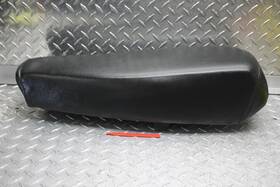
( Manufacturer Part Number: 2207303 ), ( Type: Front Fender )
Review YAMAHA Front Seat Saddle fits DT100 1977
The **Yamaha DT100 1977 Front Seat Saddle (Part #2207303)** is a meticulously crafted, vintage-inspired motorcycle seat that embodies the timeless charm and ergonomic design of Yamaha s legendary dual-sport motorcycle from the late 1970s. This genuine OEM replacement seat, originally fitted to the iconic DT100, offers a blend of classic aesthetics and functional durability, making it a sought-after restoration piece for enthusiasts and collectors alike. Crafted from high-quality, weather-resistant materials, the seat features a sturdy, padded vinyl cover with a textured, slightly grippy surface that enhances rider comfort while maintaining a retro look reminiscent of the era. The frame itself is constructed from reinforced, heat-treated steel, ensuring long-lasting strength and stability, while the integrated foam padding provides a plush yet supportive seating experience, ideal for both casual rides and extended adventures. Whether restoring a classic DT100 or upgrading an aftermarket build, this seat seamlessly bridges the gap between nostalgia and modern practicality, delivering a comfortable yet authentic riding position that honors Yamaha s engineering heritage. Its precise fitment and attention to detail make it an essential component for any rider seeking to preserve or revive the spirit of the 1970s dual-sport legend.
The Yamaha DT100 from 1977, specifically the model you referenced (Yamaha 2207303), is a classic dual-sport motorcycle known for its simplicity, durability, and nostalgic appeal. Below are the key pros and cons of purchasing this particular bike, followed by a conclusion and recommendation.
---
**Pros:**1. **Classic Design and Nostalgia:** The DT100 is an iconic motorcycle from the 1970s, embodying the rugged, no-frills aesthetic of early dual-sport bikes. For enthusiasts who appreciate vintage machinery, its design is a nostalgic throwback to an era of simpler, more mechanical riding experiences.
2. **Proven Reliability:** The DT100 is renowned for its durability and straightforward engineering. Many examples from this era have been ridden for decades with relatively minor maintenance, making it a practical choice for riders who prioritize longevity over modern conveniences.
3. **Lightweight and Maneuverable:** Weighing around 190 200 lbs (depending on condition), the DT100 is easy to handle, making it suitable for riders of various skill levels, including beginners or those looking for a lightweight adventure bike.
4. **Simple Mechanics:** The bike s design is uncomplicated, featuring a single-cylinder, air-cooled engine with minimal electronic components. This simplicity translates to easier repairs, lower maintenance costs, and a better understanding of how the motorcycle works for DIYers.
5. **Off-Road Capability:** While not as advanced as modern dual-sports, the DT100 was originally designed for off-road use. Its knobby tires, lightweight frame, and low seat height make it capable of handling trails, dirt roads, and light overlanding adventures.
6. **Community and Customization:** The DT100 has a dedicated following, with a wealth of aftermarket parts, restoration guides, and community support available. This makes it easier to find help, modify the bike, or source replacement components.
7. **Fuel Efficiency:** The 98cc single-cylinder engine is notoriously frugal, often achieving 100 miles per gallon on the road and even better off-road. This makes it an economical choice for short trips or casual riding.
8. **Low Cost of Ownership:** Compared to modern motorcycles, the DT100 s parts and labor costs are relatively low. Many mechanics are familiar with its mechanics, and used parts are widely available.
---
**Cons:**1. **Age and Wear:** A 1977 DT100 will likely require significant restoration or maintenance to bring it back to reliable condition. Rust, worn-out components, and outdated materials (e.g., original tires, belts, or seals) are common issues that may need addressing.
2. **Outdated Safety Features:** Modern safety standards (e.g., ABS, traction control, modern brakes) are absent. The DT100 lacks disc brakes (it uses a drum brake at the rear and a front drum or early disc, depending on the model year), which can be less effective in stopping power or in wet conditions.
3. **Comfort and Ergonomics:** The riding position is upright and basic, which can be uncomfortable for long rides. The seat is thin and hard, and the handlebars are wide and low, which may not suit riders with modern ergonomic preferences.
4. **Performance Limitations:** The engine produces only about 8 horsepower and 6 lb-ft of torque, making it slow by today s standards. It struggles with steep climbs, high-speed stability, or carrying heavy loads. Modern dual-sports or adventure bikes offer significantly more power and torque.
5. **Legal Restrictions:** Some jurisdictions have restrictions on vintage motorcycles, particularly if they lack modern safety equipment (e.g., turn signals, mirrors, or lighting). You may need to modify or register the bike as a "vintage" or "historic" vehicle, which can complicate insurance and legal requirements.
6. **Environmental Concerns:** The DT100 runs on leaded fuel (if it s been stored long-term), which is no longer available in most places. Switching to unleaded fuel may require modifications to the carburetor or engine, adding complexity and cost.
7. **Resale Value:** While the DT100 has a cult following, its resale value is limited compared to modern bikes or even other classic motorcycles. It s primarily valued by enthusiasts, not as a practical investment.
8. **Maintenance Challenges:** Some components may be difficult to source or require specialized knowledge to repair. For example, the original belt drive (if not converted to a chain) can be finicky, and the engine s simplicity can also mean it s prone to overheating or poor fuel economy if not maintained properly.
9. **Noise and Vibration:** The DT100 is loud and vibrates significantly, especially at higher RPMs. This can be uncomfortable for long rides and may not appeal to riders seeking a quieter experience.
10. **Modern Infrastructure Limitations:** Many modern roads, parking lots, or public areas are not designed with small, slow motorcycles like the DT100 in mind. Its size and speed may make it impractical for urban commuting or highway use.
---
**Conclusion:**The Yamaha DT100 from 1977 is a fascinating and rewarding motorcycle for the right owner. It excels as a nostalgic project bike, a tool for learning about motorcycle mechanics, or a lightweight adventure companion for casual off-road use. However, it is not a practical choice for riders seeking modern comfort, performance, or safety features. The bike s charm lies in its simplicity and history, but its limitations particularly in terms of speed, comfort, and legal compliance make it better suited for enthusiasts who are willing to invest time and effort into restoration and maintenance.
If you re drawn to the DT100 for its vintage appeal and don t mind its quirks, it can be a deeply satisfying ride. However, if you prioritize modern convenience, safety, or performance, you may find it frustrating or impractical.
---
**Recommendation:** Purchase the Yamaha DT100 **only if**:- You are an enthusiast who appreciates classic motorcycles and are prepared to invest time and money in restoring or maintaining it.
- You plan to use it primarily for light off-road adventures, trail riding, or as a project bike to learn about motorcycle mechanics.
- You are comfortable with its limitations in terms of speed, comfort, and modern safety standards.
- You have access to a mechanic or community with experience working on vintage Yamahas.
**Avoid purchasing it if**:- You need a reliable, modern motorcycle for daily use or long-distance riding.
- You expect it to run "out of the box" without significant work assume it will require a full restoration.
- You are not willing to deal with the challenges of maintaining a 45-year-old motorcycle, including sourcing parts and dealing with rust or worn components.
- You prioritize safety features like ABS, modern brakes, or ergonomic comfort over nostalgia.
For most modern riders, the DT100 is best enjoyed as a hobbyist s project or a weekend toy rather than a primary motorcycle. If you re serious about owning a classic Yamaha, consider a more modern dual-sport (e.g., a Yamaha TW200 or TW200s) or a well-restored example of a later DT model (e.g., DT250 or DT300) for better balance of nostalgia and practicality.
Details:
If the item does not fit motorcycle model specified in listing. ADDRESS: Steele's Cycle, 2025 W. ; FABRIC NOT RIPPED OR TORN,NO CRACKS UNWANTED HOLES IN PAN,NO MISSING STAPLES LOOSE STITCHING WELL PICTURED. Inglewood, CO 80110.
; 1977 YAMAHA DT100 FRONT SEAT SADDLE. Many countries only allow 79 max package length and girth combined. Each part is systematically placed to be easily located once purchased. More options available upon request.
part #: 2207303 price
- $279.99
specifications febocy:
- for models: Dt100
- for makes: Yamaha
- for years: 1977
- mpn: 2207303
- type: Front Fender
shipping febocy:
- class: Standard
- transit: 4-7 Days
- cost: $34.99
- carrier: FedEx
- service: FedEx Ground / FedEx Home Delivery
- type: Fixed
general febocy:
- Motorcycle Scooter Parts Accessories > Body Frame > Fenders
- condition: Used
offer febocy:
- sold: 0
- best offers: True
- started: May 16, 2026
- options: Ship-to-home
- availability: In Stock
- quantity: 1
returns febocy:
- policy: Returns Accepted
- paid by: Buyer
- time: 30 Days
payments febocy:
- other
- wallet: Paypal
- credit card: Visa
seller febocy:
- # reviews: 58680
- rating: 100.0%
- city: Englewood, Colorado
Yamaha 2207303 Is Similar To:
- 14b-y2151-00-p2 Yamaha Yzf Blue Oem Front Wheel Fender Cowl Fairing (32.7% similar) This front fender has light scratches. yamaha SF r6 blue oem front wheel fender cowl fairing b1 this is in great condition with normal wear. Removed from: 2017 yamaha SF r6 with 1164 miles please review all pictures to assess the condition of item. The tabs are in tact so it will mount like ...(October 16th, 2018)
- 14b-y2151-20-p2 Yamaha Yzf Front Wheel Fender Cowl Fairing (31.7% similar) Please look at all pictures thanks. The tabs are in tact so it will mount like should. 2015 yamaha SF r1 front wheel fender cowl fairing 14B-Y2151-20-P2 thumbnails to this is in great condition with normal wear. This front fender has light scratches. This front fender has two broken tabs. Items ...(October 29th, 2018)
- 14b-y2151-30-p5 14b-y2151-50-p2 Yamaha Yzf Blue Oem Front Wheel Fender Cowl Fairing (28.6% similar) Including any wear and cosmetic or mechanical damage. Removed from: 2016 yamaha SF r1 with 963 miles please review all pictures above, not just the 4 highlight ones below. Make sure to like follow and review us on Facebook enjoy the ride. This front fender is in great condition, but has few deep ...(November 12th, 2018)
- 1561-62 Cycra Performance Front Fender Blue Yamaha Etc (24.7% similar) Gov federal and state noise emissions laws regulate modifications that affect from motor vehicles, including motorcycles. USPS shipping service. Quality injection molded in the USA. Brand: Lycra manufacture part number: details integrated fender brace fib technology makes this stiffer than stock ...(May 12th, 2018)
- 15r-21510-00-93 Yamaha Maxim Front Fender (40.5% similar) Parts are used and may have some scratches chips rust require cleaning touch up. Please understand that parts are not new and were removed from make model listed some may be original yamaha XJ750J XJ750 maxim front fender t3 the show normal signs of wear for a 35 year old part...(June 29th, 2018)
- 16410oma Hotbodies Racing Yamaha Lightweight Front Fender (36% similar) It still needs the holes drilled in for mounting. It was never put on a bike, but is not mint or perfect, does have some paint damage to the primer as we mentioned and few scratches around corners edges of fender. According to the catalog this will fit yamaha YZF600 R6. Hot bodies yamaha r6 YZFR6 ...(July 5th, 2018)
- 1c3-21511-51-00 Yamaha Wr Yz Stroke Front Fender (44% similar) Combined shipping:i do combine shipping. Here is a front fender off 2006 yamaha YZ125. GSR veers 632 gs I will try my hardest to respond quickly and appropriately your problems...(March 23rd, 2018)
- 1cyc-1431-42 Cycra Lite Front Fender White Yamaha (28.3% similar) Re designed to match stock oem shapes. Vented back section provides 33 increased airflow to radiator. Details quality injection molded fit and finish. Lighter than oem stock fender. Slab nuts replace pop rivets for secure fit. Integrated fender brace fib technology...(June 16th, 2018)
- 1cyc-1431-62 Cycra Lite Front Fender Blue Yamaha (28.6% similar) Integrated fender brace fib technology. Slab nuts replace pop rivets for secure fit. Gov federal and state noise emissions laws regulate modifications that affect from motor vehicles, including motorcycles. USPS shipping service. Re designed to match stock oem shapes. Vented back section provides 33...(July 23rd, 2018)
- 1cyc-1461-12 Cycra Black Front Fender Cl For Yamaha Yz (24.7% similar) Please for a shipping quote to these destinations. Keep all packaging materials and the original shipping box. Matches stock. Free ground shipping applies to lower 48 contiguous states only...(September 6th, 2018)