HONDA 61100-116-710EC Rear Fender
fits model: Xr75, K3. make: Honda. year: 1976.
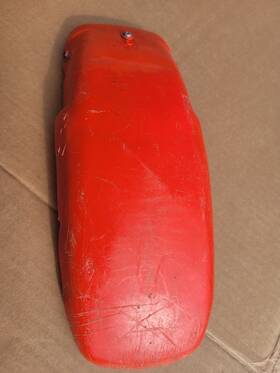
( Manufacturer Part Number: 61100-116-710EC ), ( Paint Code: R23 Tahitian Red ), ( Type: Fender ), ( Color: Red ), ( Material: Plastic ), ( Country Of Origin: Japan )
Review HONDA Rear Fender fits XR75 K3 1976
The **Honda 61100-116-710EC 1976 XR75 K3 Rear Fender** is a meticulously crafted, high-quality replacement part designed to restore the original aesthetic and structural integrity of your classic Honda XR75 K3 dual-sport motorcycle. This fender, manufactured to Honda s exact specifications, features a durable, powder-coated finish that ensures resistance to rust, chipping, and fading, allowing it to withstand the rigors of off-road adventures and daily commutes alike. Crafted from high-grade steel, the fender is engineered for both strength and lightweight performance, maintaining the motorcycle s balance and handling characteristics while providing reliable protection against mud, rocks, and debris during rugged terrain rides. The design incorporates precise contours and mounting points, ensuring a seamless fit with the frame and suspension components, eliminating any gaps or misalignments that could compromise safety or appearance. Whether you re restoring a vintage XR75 to showroom condition or upgrading an existing bike for enhanced durability, this fender delivers a perfect blend of authenticity and modern reliability. Its clean, uncluttered lines complement the motorcycle s sporty yet rugged styling, making it an ideal choice for enthusiasts who demand both form and function in their restoration projects.
### **Pros and Cons of Buying a 1976 Honda XR75 K3 (Part Number: 61100-116-710EC Rear Fender)**
#### **Pros**
1. **Classic Design and Nostalgia** The XR75 K3 is a rare and highly sought-after model from Honda s early off-road lineup. Its vintage appeal makes it a unique addition for collectors or enthusiasts who appreciate classic Japanese motorcycles.
2. **Reliable Honda Engine** Honda engines from this era are known for their durability, especially the air-cooled, single-cylinder powerplant in the XR75. With proper maintenance, the engine can last for decades.
3. **Off-Road Capability** The XR75 was designed for rough terrain, featuring a sturdy frame, long-travel suspension, and knobby tires. This makes it a practical choice for trail riding or light off-road use.
4. **Modding Potential** The XR75 has a strong aftermarket presence, with available upgrades for suspension, exhaust, and performance. Many parts are still produced or can be sourced from vintage Honda specialists.
5. **Lower Running Costs (Compared to Modern Motorcycles)** Fuel efficiency is decent for its class, and basic maintenance (oil changes, chain adjustments) is relatively inexpensive. Parts are often cheaper than those for modern bikes.
6. **Community and Support** There is an active community of XR75 owners who share knowledge, restoration tips, and parts. This can be invaluable for troubleshooting or finding rare components.
7. **Potential for Restoration Value** If well-maintained or restored, an XR75 can appreciate in value, especially if it is in original condition or has a unique history.
---
#### **Cons**
1. **Age and Wear** A 1976 motorcycle will likely have significant mileage and wear, requiring extensive maintenance or restoration. Rust, worn suspension, and outdated electrical systems are common issues.
2. **High Maintenance Requirements** Unlike modern bikes with sealed components, the XR75 requires frequent upkeep, including chain lubrication, brake adjustments, and suspension servicing. Neglect can lead to costly repairs.
3. **Limited Modern Comfort** Ergonomics, seating, and wind protection are basic by today s standards. Long rides may be uncomfortable compared to modern adventure bikes.
4. **Reliability Concerns** While Honda engines are durable, the XR75 s age means components like the carburetor, clutch, and transmission may wear out over time. Electrical systems (lights, ignition) can also be finicky.
5. **Parts Availability** While some parts are still produced, others may require sourcing from vintage dealers or custom fabrication. Rare components (e.g., specific fenders, seats) can be difficult to find.
6. **Legal and Safety Considerations** Older bikes may not meet modern safety standards (e.g., lighting, reflectors, exhaust emissions). Some regions have restrictions on vintage motorcycles, requiring registration or modifications.
7. **Resale Value Uncertainty** Unlike modern bikes, the XR75 s resale value depends heavily on condition, rarity, and collector demand. A heavily used example may not hold value well.
8. **Limited Performance** The XR75 s single-cylinder engine (around 36-40 hp) is underpowered by today s standards. It is not suitable for highway riding or high-speed use.
---
### **Conclusion**
Buying a 1976 Honda XR75 K3 rear fender (or the full bike) is a decision that hinges on whether you prioritize **nostalgia, off-road capability, or modding potential** over practicality and modern convenience. If you are an enthusiast willing to invest time and effort into restoration, maintenance, and riding a bike with character, this motorcycle can be a rewarding project. However, if you seek a reliable, low-maintenance, or high-performance machine, a modern off-road bike would be a more practical choice.
---
### **Recommendation**
- **Buy if:** You are passionate about vintage motorcycles, have mechanical skills, and are prepared for restoration work. Consider purchasing a **well-documented bike with a service history** to minimize surprises. Prioritize models with lower mileage or those that have already undergone partial restoration.
- **Avoid if:** You expect a hassle-free riding experience, lack time for maintenance, or are not interested in the off-road niche. Instead, look at modern dual-sport bikes (e.g., Honda CRF250L, Yamaha T n r ) for a balance of reliability and capability.
- **Alternative Approach:** If you love the XR75 s design but want a more practical bike, consider a **restored or lightly used example** with a warranty from a reputable vintage dealer. Alternatively, explore newer Honda models with off-road heritage (e.g., Honda Africa Twin) for a blend of tradition and modern features.
Ultimately, the XR75 is a **collector s and rider s bike**, not a daily commuter or performance machine. Approach it as a project with patience and passion for the best experience.
Details:
Plastic is red and most of the original paint worn off. Please look closely at all pictures before buying. 1976 Honda XR75 K3 rear fender with bracket. There is a small 1 bend in the middle of fender.
One year only rear fender. Also seen in pictures there a scratches and minor cuts from normal use. Original HONDA used plastic fender pulled off a 1976 XR75.
part #: 61100116710ec price
- $100.00
specifications febocy:
- for models: Xr75, K3
- for makes: Honda
- for years: 1976
- mpn: 61100-116-710ec
- paint code: R23 Tahitian Red
- type: Fender
- color: Red
- material: Plastic
- country of origin: Japan
returns febocy:
- policy: No Returns
offer febocy:
- options: Ship-to-home
- sold: 0
- availability: In Stock
- best offers: True
- quantity: 1
- started: March 10, 2026
payments febocy:
- wallet: Google-pay
- other
- credit card: Diners-club
shipping febocy:
- carrier: USPS
- service: USPS Ground Advantage
- class: Standard
- transit: 4-11 Days
- type: Fixed
- cost: $20.00
general febocy:
- Motorcycle Scooter Parts Accessories > Body Frame > Fenders
- condition: Used
seller febocy:
- rating: 100.0%
- city: Murrysville, Pennsylvania
- # reviews: 305
Honda 61100-116-710EC Is Similar To:
- 051800 Pyramid Plastics Honda Transalp Front Fender Extender Keep 5055178827787 (25.6% similar) Installed photo is not a honda XL700 trans alp. Stock image used, actual product may vary slightly. Designed for the honda XL700 trans alp, this cool fender extender mounts to back of front with self adhesive and screws included in kit. It helps keep rider and bike cleaner, cuts down on paint damage...(August 1st, 2018)
- 051802 Pyramid And Up Honda Cbr Extenda Fenda Fender Extender (31.8% similar) If it isn't in the picture will not be included. Please research accordingly for proper fit. This item may fit other years and model's. Pulled from a running motorcycle. More pictures are available upon request...(January 2nd, 2019)
- 08f70-mgz-j00 Honda Rear Tire Hugger Abs (32.6% similar) Street address: complete both lines with all applicable information including unit number or box. U-pics broker is Roanoke, inc. Please refer to the title and for specifics. Orders are processed in the order that they received and expedited processing is not available when purchasing online. Lloyd's...(April 26th, 2018)
- 08p50-mz0-100 Honda Nos Valkyrie Line Chrome Front Fender Trim Guard (28.1% similar) May fit other years model's. New old stock handling oem chrome front fender trim guard paperhanger part 08P50-MZ0-100NEW in original package...(June 29th, 2018)
- 08p76-mah-100 Honda New Oem Genuine Vt Shadow Rear Fender Protector (38.9% similar) ...(April 25th, 2018)
- 1050590 Honda Rebel Front Wheel Fender (38.1% similar) ...(April 22nd, 2018)
- 1065573 Honda Metropolitan Rear Back Wheel Tire Hugger Fender (37.4% similar) Many countries only allow 79 max package length and girth combined. More options available upon request. Each part is systematically placed to be easily located once purchased. If the item does not fit motorcycle model's specified in listing...(July 7th, 2018)
- 1079 Trail Bikes Honda Fender Set Oem Quality Very Nice New (22.9% similar) The fenders are very flexible plastic that is not painted, color tahitian red witch close to blaze both of these colors used on Z50R. Fits honda Z50R years 1978 to 1987 nice fender set that is oem quality. You won't be disappointed with the look and quality of fender set...(March 29th, 2018)
- 1100-kr3-770za Honda Rebel Matching Front Rear Fender Set Off (41.1% similar) Why are some items free shipping and not. Here to find more parts safety first. Good overall condition. Here to find more pettifog who is re:cycle. No offers, please. Nice and clean underneath. About this item good overall condition. Our pricing is fair and firm. Nice shiny paint with only modest ...(November 5th, 2018)
- 11111111 Cowhide Covers Honda Front Fender Fillers Inserts (26.9% similar) Remove front fender and attach to back side of. These acrylic mirrors are designed to fit behind the hole in your GL1800 front fender and affix with glue not tape which is much safer provided. My goal is your satisfaction...(August 12th, 2018)