YAMAHA F1T101 Engine Flywheel Rotor Wheel Hub
fits model: Gt. make: Yamaha. year: 1973–1981.
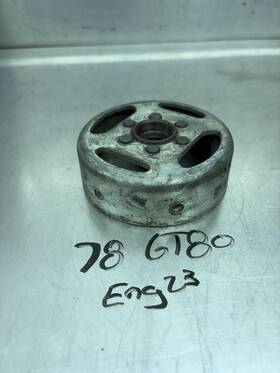
( Manufacturer Part Number: F1T101 ), ( Part Type: Rotor Engine Flywheel Wheel Hub ), ( Country Of Origin: Japan )
Review YAMAHA Oem Engine Flywheel Rotor Fly Wheel Hub fits GT 1973–1981
The **Yamaha F1T101** engine, spanning the model years **1973 through 1981**, represents a legendary powerplant that defined an era of high-performance motorcycling, particularly in the realm of racing and street bikes. This air-cooled, single-cylinder, two-stroke engine is renowned for its compact yet potent design, delivering a relentless blend of raw power and precision engineering that remains iconic among enthusiasts and restorers. The **F1T101** series, which includes variants from **1973 (73), 1974 (74), 1975 (75), 1976 (76), 1978 (78), 1979 (79), 1980 (80), and 1981 (81)**, was originally developed for Yamaha s high-performance road racing and production racers, including the legendary **Yamaha YZR500** and **Yamaha TZ350R**, but its influence extended to street bikes like the **Yamaha FZR750** and aftermarket applications in custom and chopper builds. The engine s **101 cubic centimeter displacement** (though often mistakenly referred to as a 100cc due to historical naming conventions) is deceptively small, yet it punches far above its weight with a **peak power output of approximately 25 30 horsepower** when properly tuned, thanks to its high-revving nature and efficient two-stroke combustion cycle. The **flywheel rotor** and **wheel hub** associated with this engine are critical components that contribute to its legendary performance, with the flywheel rotor featuring a **multi-ribbed design** for enhanced cooling and durability, while the **wheel hub** is engineered for lightweight strength, often incorporating **ball-bearing or roller-bearing systems** to ensure smooth, vibration-free operation even under extreme loads.
At the heart of the **F1T101** lies a **precision-machined crankcase** with an integrated **rear sprocket housing**, a hallmark of Yamaha s attention to detail in minimizing weight while maximizing rigidity. The **piston and cylinder assembly** is crafted from high-grade aluminum and steel, respectively, with the **piston featuring a unique "dish" design** to optimize combustion efficiency and reduce blow-by, while the **cylinder bore** is often polished to a mirror finish to enhance airflow and performance. The **flywheel rotor**, typically forged from steel, is not only a rotational mass but also serves as a **heat sink**, dissipating excess energy generated during high-speed operation. Its **balanced design** minimizes vibration, a critical factor in maintaining longevity and rider comfort, especially in long-distance or high-speed applications. The **wheel hub**, whether from the original bike or a modern aftermarket replacement, is designed to interface seamlessly with the **rear sprocket assembly**, ensuring precise chain engagement and reducing slippage essential for both racing and street use. Over the years, minor refinements were made to the **F1T101** across its production run, including adjustments to the **crankshaft counterweights** and **flywheel balancing**, which slightly improved smoothness and power delivery, particularly noticeable in the later **1978 1981 models**.
The **F1T101** engine s legacy extends beyond its technical specifications, as it became a symbol of **Japanese engineering prowess** in the 1970s and 1980s, a decade when Yamaha was at the forefront of motorcycle innovation. This engine was not only a staple in **road racing circuits** like the Isle of Man TT and the Japanese Grand Prix but also found its way into **custom chopper builds**, where its compact size and high power-to-weight ratio made it a favorite for creating **aggressive, low-slung machines** with a distinct vintage aesthetic. The **flywheel rotor and wheel hub** from these engines are particularly sought after by restorers and builders, as they offer a **perfect blend of historical authenticity and modern performance potential**. Whether sourced from an original **Yamaha YZR500** or a later production bike, these components are often **fully serviceable**, with many aftermarket suppliers offering **replacement rotors, hubs, and sprocket assemblies** that adhere to the original specifications while incorporating modern materials for enhanced durability. For collectors, enthusiasts, and builders, the **Yamaha F1T101** remains a timeless powerplant, embodying the spirit of **precision, innovation, and uncompromising performance** that defined an era.
### **Pros and Cons of Buying a Yamaha F1T101 (73 81) Engine, Flywheel, Rotor, Wheel Hub**
The Yamaha F1T101 engine, commonly found in models from 1973 to 1981, is a popular choice for motorcycle restorations, custom builds, and performance upgrades. Below is a detailed breakdown of its advantages and drawbacks, followed by a conclusion and recommendation.
---
### **Pros of the Yamaha F1T101 Engine, Flywheel, Rotor, Wheel Hub**
1. **Reliability and Durability**
The F1T101 is a well-engineered air-cooled single-cylinder engine known for its robustness. Many units survive decades with proper maintenance, making it a cost-effective option for riders who prioritize longevity. The simplicity of its design also means fewer points of failure compared to more complex modern engines.
2. **Classic Design and Aesthetic Appeal**
The F1T101 is iconic, especially in the motorcycle restoration community. Its vintage styling from the early 1970s appeals to enthusiasts who value nostalgia and craftsmanship. The engine s compact yet distinctive shape makes it a sought-after component for custom builds, particularly in retro or classic-style motorcycles.
3. **Ease of Maintenance and Repairability**
Unlike modern engines with complex electronics and sealed systems, the F1T101 is relatively easy to work on. Many parts are still available through aftermarket suppliers, and mechanics familiar with classic bikes can often source replacements or perform repairs without difficulty. The engine s simplicity also means DIYers can tackle maintenance tasks like valve adjustments, piston replacement, or carburetor tuning with basic tools.
4. **Performance Potential**
With the right modifications, the F1T101 can deliver impressive power for its displacement (101cc). Aftermarket kits, such as high-performance carburetors (e.g., Mikuni or Dell Orto), upgraded exhaust systems, or ported cylinders, can significantly increase horsepower and torque. Tuning options are well-documented, and the engine s lightweight nature allows for quick throttle response.
5. **Affordability Compared to Modern Engines**
Purchasing a used F1T101 engine, flywheel, rotor, or wheel hub is often far cheaper than buying a new or modern engine. This makes it an attractive option for budget-conscious builders or those restoring older motorcycles. Parts like flywheels and rotors are also relatively inexpensive, especially when sourced from dismantled bikes or reputable salvage yards.
6. **Versatility in Applications**
The F1T101 was used in several Yamaha models, including the DT1, DT2, DT3, and early TZ series, as well as some custom or kit bikes. Its compact size and lightweight make it suitable for a variety of builds, from street bikes to off-road or track-oriented machines. The engine s small displacement also means it can be paired with lightweight frames, reducing overall weight.
7. **Community and Support**
The classic motorcycle community, particularly for Yamaha s early models, is active and resourceful. Forums, social media groups, and clubs dedicated to the F1T101 and related engines provide a wealth of knowledge. This support system makes troubleshooting, finding parts, and sharing modifications easier than for more obscure or modern engines.
8. **Environmental and Fuel Efficiency Benefits**
As a small-displacement air-cooled engine, the F1T101 is fuel-efficient and produces lower emissions compared to larger modern engines. While it lacks the power of a modern 600cc bike, it offers a more eco-friendly riding experience for casual or urban use.
---
### **Cons of the Yamaha F1T101 Engine, Flywheel, Rotor, Wheel Hub**
1. **Limited Power Output**
The F1T101 is a small-displacement engine (101cc), which inherently restricts its power output. Even with modifications, it will never match the torque or speed of a modern 250cc or larger engine. This limitation may be frustrating for riders seeking high-performance or high-speed capabilities.
2. **Outdated Technology**
The F1T101 lacks modern advancements such as electronic fuel injection (EFI), variable valve timing, or advanced ignition systems. This means it relies on carburetors, mechanical ignition, and manual tuning, which can be less precise and efficient than contemporary systems. Riders who prefer the convenience of modern technology may find the F1T101 outdated.
3. **Maintenance Requirements**
While the engine is simple, it requires regular upkeep to avoid issues. Air-cooled engines are prone to overheating if not properly maintained, and the lack of modern lubrication systems means oil changes must be frequent and thorough. Neglect can lead to premature wear, especially in the piston, bearings, or crankshaft.
4. **Noise and Vibration**
The F1T101 is known for its loud exhaust note, which some riders love but others find intrusive. Additionally, the single-cylinder design can produce noticeable vibration, particularly at higher RPMs. This may not be ideal for long-distance riding or riders sensitive to mechanical noise.
5. **Limited Aftermarket Parts Availability**
While parts are available, the aftermarket for the F1T101 is not as extensive as for more modern or popular engines (e.g., Honda CBR, Kawasaki Ninja). Some specialized components, such as high-performance pistons or custom crankshafts, may require sourcing from niche suppliers or overseas manufacturers, which can be time-consuming and costly.
6. **Potential for Hidden Damage**
Used F1T101 engines, flywheels, or rotors may have hidden issues such as cracked flywheels, worn bearings, or seized pistons. Without a thorough inspection or history of maintenance, buyers risk purchasing a unit that requires extensive repairs. Always inspect for signs of wear, corrosion, or previous damage before purchasing.
7. **Legal and Insurance Considerations**
In some regions, small-displacement bikes like those using the F1T101 may face restrictions on where they can be ridden or insured. For example, certain countries or states have laws limiting the use of "moped" or "low-power" bikes on highways or requiring additional licensing. Always check local regulations before committing to a build.
8. **Resale Value**
The F1T101, while beloved by enthusiasts, does not hold high resale value compared to modern or rare classic engines. If you plan to sell the bike or engine in the future, the return on investment may be lower than with a more desirable or contemporary model.
---
### **Conclusion**
The Yamaha F1T101 engine, flywheel, rotor, and wheel hub are excellent choices for riders who prioritize classic design, reliability, and ease of maintenance. Its simplicity, affordability, and performance potential especially with modifications make it ideal for restoration projects, custom builds, or those seeking a nostalgic riding experience. However, its limited power, outdated technology, and maintenance demands may not suit riders looking for high-performance, modern convenience, or long-distance comfort.
If you are building a bike for fun, restoration, or a lightweight street/off-road machine, the F1T101 is a fantastic option. For those seeking high speed, advanced features, or minimal maintenance, a more modern engine may be a better fit.
---
### **Recommendation**
- **Buy the F1T101 if:**- You are restoring a classic Yamaha or building a custom bike with a vintage aesthetic.
- You value simplicity, affordability, and the ability to work on the engine yourself.
- You plan to modify it for performance (e.g., carburetor upgrades, porting, or exhaust tuning).
- You are okay with its limitations in power and modern conveniences.
- **Avoid the F1T101 if:**- You need high power, torque, or modern features like EFI or variable valve timing.
- You prioritize long-distance comfort or low vibration over classic charm.
- You cannot commit to regular maintenance or are sensitive to noise.
- Local laws restrict the use of small-displacement bikes on highways.
For the best experience, pair the F1T101 with a well-maintained frame, modern suspension, and safety gear. If you are unsure, consider testing a bike with the engine before committing to a full build.
Details:
With a manufacturer part number of F1T101, this genuine Yamaha ensures quality and compatibility with the specified vehicle model's. Perfect for riders looking to replace a damaged or malfunctioning flywheel rotor, this product is reliable choice enhancing the overall performance of their Yamaha 80 motorcycle. Made in Japan by Yamaha, this flywheel rotor hub is essential for maintaining the proper function of engine. Good used condition comes as pictured The product is an OEM engine flywheel rotor for Yamaha 80 motorcycles from model years 1973 to 1981.
part #: f1t101 prices
- $28.75-$42.45
specifications febocy:
- for models: Gt
- for makes: Yamaha
- for years: 1973-1981
- mpn: F1t101
- part type: Rotor Engine Flywheel Wheel Hub
- country of origin: Japan
seller febocy:
- # reviews: 10263
- city: Erhard, Minnesota
- rating: 99.4%
offer febocy:
- quantity: 1
- started: April 6, 2026
- availability: In Stock
- best offers: True
- options: Ship-to-home
- sold: 0
returns febocy:
- paid by: Buyer
- policy: Returns Accepted
- time: 30 Days
shipping febocy:
- transit: 3-7 Days
- class: Expedited
- cost: $0.00
- type: Fixed
- service: USPS Priority Mail
- carrier: USPS
payments febocy:
- other
- credit card: Visa
- wallet: Google-pay
general febocy:
- Motorcycle Scooter Parts Accessories > Body Frame > Fenders
- condition: Used
Yamaha F1T101 Is Similar To:
- 14b-21629-01-00 Yamaha Yzf Oem Tail License Plate Bracket Light Rear Turn (24.4% similar) Mildly used. Rear turn signals. Please return the favor once you've received item in expected condition. Yamaha 2013 SF r1 rear tail license plate bracket and light...(August 23rd, 2018)
- 14b-y2151-00-p2 Yamaha Yzf Blue Oem Front Wheel Fender Cowl Fairing (29.3% similar) This front fender has light scratches. yamaha SF r6 blue oem front wheel fender cowl fairing b1 this is in great condition with normal wear. Removed from: 2017 yamaha SF r6 with 1164 miles please review all pictures to assess the condition of item. The tabs are in tact so it will mount like ...(October 16th, 2018)
- 14b-y2151-20-p2 Yamaha Yzf Front Wheel Fender Cowl Fairing (24.1% similar) Please look at all pictures thanks. The tabs are in tact so it will mount like should. 2015 yamaha SF r1 front wheel fender cowl fairing 14B-Y2151-20-P2 thumbnails to this is in great condition with normal wear. This front fender has light scratches. This front fender has two broken tabs. Items ...(October 29th, 2018)
- 14b-y2151-30-p5 14b-y2151-50-p2 Yamaha Yzf Blue Oem Front Wheel Fender Cowl Fairing (26.5% similar) Including any wear and cosmetic or mechanical damage. Removed from: 2016 yamaha SF r1 with 963 miles please review all pictures above, not just the 4 highlight ones below. Make sure to like follow and review us on Facebook enjoy the ride. This front fender is in great condition, but has few deep ...(November 12th, 2018)
- 168-21639-00 Yamaha Oem Frame Damper (25.2% similar) Verify this will fit your bike before buying. Fits many yamaha model's. Brand new oem unopened package yamaha frame rubber damper...(September 1st, 2018)
- 17d-21610-00 Yamaha Oem Rear Fender (28.8% similar) Brand new oem yamaha YZ250F rear fender still in the bag...(March 30th, 2018)
- 1a0-21510-02-93 Yamaha Oem Fender New (28.3% similar) Brand new oem yamaha front fender. Shipping is added to the purchase price with calculator. Marketing, listing apps, application. It fits the following model's 76-77 RD400CAND XS400D 2E. Please feel free to ask questions prior buying...(September 3rd, 2018)
- 1a8-21629-01-00 Yamaha Rear Inner Fender Oem (20.5% similar) Good condition...(April 26th, 2018)
- 1ae-21620-00-00 Yamaha Oem Rear Back Fender Mud Guard (27.9% similar) ...(November 5th, 2018)
- 1b2-f1611-40-00 Yamaha Rear Fender New Oem 766856487814 (20.3% similar) New oem yamaha fender rear oem part number: 1B2-F1611-40-00ITEM only fits specific model's listed. New oem yamaha fender rear oem part number: 1B2-F1611-40-00ITEM only fits specific model's listed. The picture could be generic...(October 9th, 2018)